
 English
Endless synchronous belts are available in more than one construction. A belt can be formed by joining open-ended material, or it can be manufactured as a continuous loop without a...
READ MORE

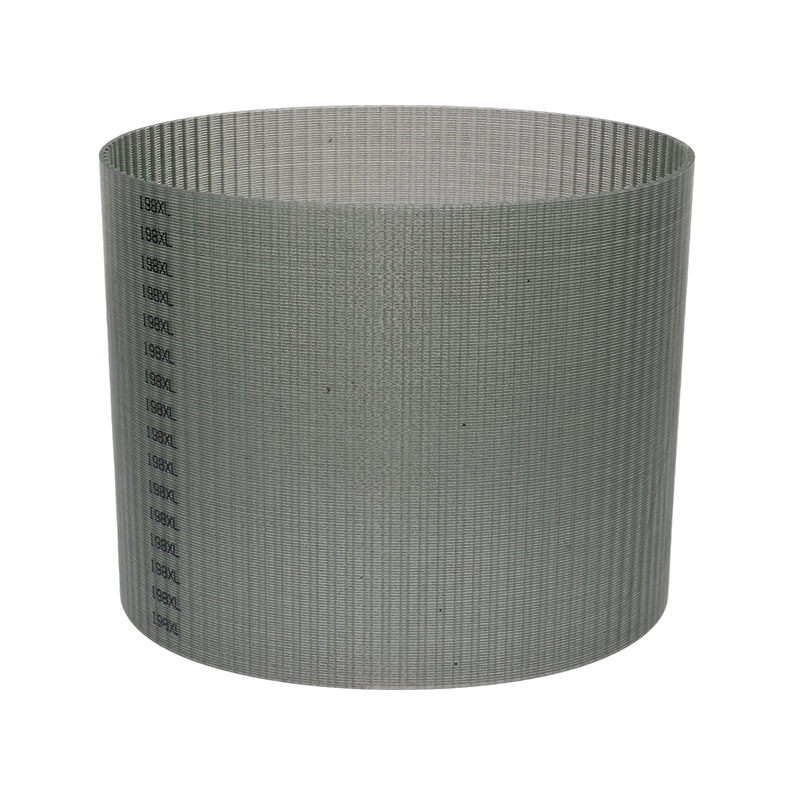
Product Features:A compact, lightweight precision ...

Endless synchronous belts are available in more than one construction. A belt can be formed by joining open-ended material, or it can be manufactured as a continuous loop without a...
READ MOREPrecision motion systems depend on more than motor control and accurate pulleys. The timing belt also plays a direct role in how consistently rotary motion becomes linear or synchr...
READ MOREThe rapid expansion of automation, robotics, and intelligent manufacturing is creating higher expectations for mechanical motion systems. Modern machines require transmission compo...
READ MOREModern industrial equipment is entering a new stage where accuracy, smooth operation, and compact mechanical structures have become important design goals. From automated assembly ...
READ MORELet me clear this up right away. No, a synchronous belt and a V belt are not the same. They look different, work differently, and fail differently.
A synchronous belt (often called a timing belt or toothed belt) has teeth that engage with matching grooves on the pulleys. This positive engagement means no slip. The driven shaft rotates exactly with the driving shaft—synchronous motion. That's why they're used in engines, CNC machines, and any application where timing between shafts is critical.
A V belt has a trapezoidal cross-section that wedges into a matching groove on the pulley. It relies on friction to transmit power. That means some slip is normal and even necessary—it protects the driven equipment from shock loads. But that slip also means the driven shaft speed isn't precisely locked to the driver.
Here's a quick comparison:
| Feature | Synchronous Belt (Timing Belt) | V‑Belt |
| Power transmission | Positive engagement (teeth) | Friction (wedging action) |
| Slip | None | Some slip is normal |
| Speed ratio | Exact, constant | Variable (slip changes with load) |
| Tension required | Moderate | High (needs wedge force) |
| Noise | Quieter at speed | Whine or squeal during slip |
| Typical application | Engine timing, CNC spindles, conveyors | HVAC fans, alternators, compressors |
| Maintenance | Tension and wear inspection | Tension, alignment, and glazing check |
So if you're replacing a V belt on a fan and you're tempted to use a synchronous belt because “it looks more precise,” don't. The fan drive needs the cushioning that V-belt slip provides. A synchronous belt would transmit every torque spike directly to the bearings. That's a recipe for premature bearing failure.
Rubber timing belts are the workhorse of industrial power transmission. But not all rubber belts are the same. The material, tooth profile, and construction all change based on the application. Here are the main types you'll encounter in European and American industrial settings.
Standard Neoprene Timing Belts
These are the classic black rubber belts you see on most machinery. Neoprene (polychloroprene) offers good oil resistance, moderate temperature tolerance ( 30°C to +100°C), and excellent abrasion resistance. They're the default choice for general industrial applications—conveyors, packaging machines, and light duty drives.
HNBR (Hydrogenated Nitrile Butadiene Rubber) Belts
HNBR is a premium rubber that resists heat, oil, and ozone much better than neoprene. Temperature range is 40°C to +150°C. It also handles higher loads and speeds. You'll find HNBR belts in automotive timing drives, high temperature industrial ovens, and any application where oil mist is present.
Silicon Rubber Timing Belts
Silicon rubber is all about temperature. It handles 60°C to +230°C. But it's softer than neoprene or HNBR, so it wears faster in abrasive environments. You'll see silicon belts in food processing (where heat and cleanliness are critical), medical devices, and high-temperature packaging lines.
Polyurethane Timing Belts (with rubber teeth)
Some belts combine a steel or Kevlar tensile cord with a polyurethane body and rubber teeth. The polyurethane offers excellent wear resistance and low friction. The rubber teeth provide grip and reduce noise. These hybrids appear in precision robotics and high-speed pick and place machines.
Reinforcement Types
All rubber timing belts contain tensile members—the cords that take the load. The standard is fiberglass. Higher load belts use steel cord (heavy, but extremely strong) or Kevlar (light, high strength, but sensitive to shock). If you're pushing high torque, pay attention to the cord material, not just the rubber type.
The takeaway: don't just buy “a rubber timing belt.” Match the rubber compound to your temperature, oil exposure, and speed requirements. A neoprene belt in a 120°C oven will harden and crack in weeks. HNBR will last for years.
A double sided timing belt (sometimes called a dual-sided or double-toothed belt) has teeth on both the inner and outer surfaces. This allows the belt to drive pulleys from both sides—useful in serpentine drives, synchronous conveyors, and some printing press applications where you need a power take-off from the back side.
But double-sided belts have a reputation for shorter life than their single-sided cousins. Here are the real reasons, based on field experience and bearing analysis.
Flex Fatigue on the Outer Teeth
The outer teeth on a double sided belt are in tension as the belt wraps around the driving pulley. Every time the belt bends around a pulley, the outer tooth root experiences cyclic tensile stress. On a single sided belt, that bending stress is distributed differently. On a double sided belt, the outer teeth can develop microscopic cracks at the tooth root after hundreds of thousands of cycles.
What to do: Use a larger pulley diameter if possible. A 10% increase in pulley diameter can reduce flex fatigue by up to 30%.
Backside Pulley Misalignment
Double sided belts are often used in drives where the backside pulley isn't perfectly aligned with the front side pulleys. Even a small angular misalignment (0.5 degrees) causes the outer teeth to engage the pulley at an angle. That side loading wears the outer teeth unevenly—one side of the tooth wears down faster than the other.
What to do: Use laser alignment tools during installation. Check alignment at operating temperature—thermal growth shifts pulley positions.
Inadequate Tension – the “Too Tight” Mistake
Maintenance people often overtension double sided belts because they think “no slip” means “tight as possible.” That's wrong. A double sided belt needs proper tension, but overtensioning increases tooth shear stress and accelerates tooth wear on both sides.
What to do: Use a belt tension gauge or a frequency based tension meter. Follow the manufacturer's deflection force specification, not the “tighten until it feels right” method.
Debris Trapping Between Outer Teeth
The outer teeth are exposed. In dirty environments—woodworking, mining, or foundries—dust and grit get trapped between the outer teeth and the backside pulleys. That abrasion wears the tooth profile down quickly.
What to do: Install belt covers or use a belt with a wear resistant fabric covering on the outer surface. Some manufacturers offer this as an option.
Thermal Degradation of the Rubber Compound
Double sided belts run hotter than single sided belts. More surface area, more flexing, more internal friction. If you're using a neoprene belt and the ambient temperature is already 80°C, the belt temperature can hit 110°C. That's above neoprene's continuous rating. The belt hardens, cracks, and loses its teeth.
What to do: Upgrade to HNBR. It's more expensive but it survives those extra 20°C.
Contact Us
information
Chengxi Industrial Zone, Sanmen County, Zhejiang Province, China
+86-576-83355666
+86-576-83351588
product
mobile
