

Receiving an approved timing belt sample is an important step in a purchasing project, but maintaining the same specifications across hundreds or thousands of units presents a different challenge. For distributors, equipment manufacturers, and industrial buyers, small differences in tooth geometry, belt width, reinforcement, or material properties can affect product compatibility and customer satisfaction. At Chengtai, we understand that dependable bulk supply requires consistent manufacturing controls rather than relying on a successful sample alone.
As a timing belt factory, Sanmen County Chengtai Polyurethane Co., Ltd. produces synchronous belts, multi-ribbed belts, wide-angle belts, flat belts, single-sided toothed micro belts, and other polyurethane products for industrial transmission applications. Our approach to bulk orders focuses on specification confirmation, material consistency, production monitoring, inspection, and clear communication with customers.
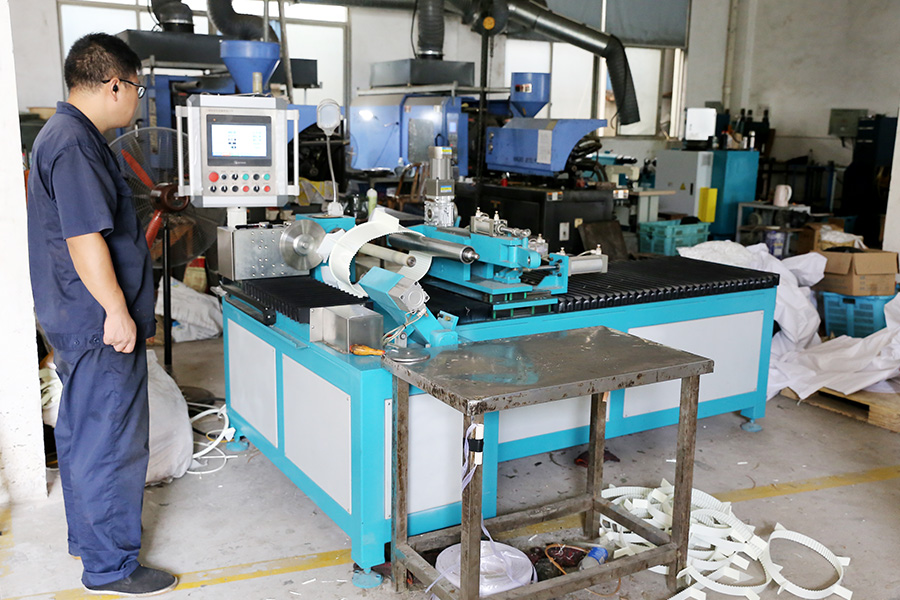
Timing belts transfer motion through the engagement between belt teeth and pulley grooves. Their performance depends on the relationship between dimensional accuracy, material behavior, reinforcement structure, and operating conditions. A product that matches the approved sample should continue to meet the same agreed requirements throughout subsequent production batches.
Small variations can create practical problems for buyers:
These concerns become more significant in recurring orders. A distributor may need to replenish the same model several times a year, while an equipment manufacturer may depend on consistent belt dimensions across an assembly line. Our production requirements therefore need to remain aligned with the confirmed specifications, regardless of order size.
Consistent output starts with a shared understanding of the product. A sample alone may not communicate every technical requirement, especially when customers request customized dimensions, special materials, or a particular reinforcement structure.
Before arranging production, we recommend confirming the following information:
For example, a T5 polyurethane timing belt uses a nominal tooth pitch of 5 mm, while a T10 belt uses a 10 mm pitch. These designations describe different tooth spacing and are not interchangeable simply because the belts share the same material. Confirming the full specification helps us align production with the customer's actual application.
The properties of the raw materials influence how a timing belt behaves after manufacturing. Differences in polyurethane formulation, rubber compound, reinforcement cords, or surface materials may affect dimensional stability, flexibility, wear behavior, and tensile performance.
At Chengtai, material requirements should be established according to the approved product design rather than changed without technical review. For repeat orders, maintaining consistent material identification and procurement requirements helps reduce unwanted variation between batches.
Material substitutions should be reviewed before implementation. A change that appears commercially convenient may alter the belt's behavior or its compatibility with the customer's equipment. We encourage customers to communicate application-specific requirements early so that material decisions can be evaluated against the intended use.
Final inspection can identify certain defects, but it cannot replace process control during manufacturing. Stable production depends on keeping important process parameters within the approved operating range and responding to deviations before they affect a larger quantity of products.
Depending on the belt construction and production method, relevant control points may include:
Process requirements vary across PU timing belts, rubber synchronous belts, open-ended belts, and endless constructions. We therefore base inspection criteria on the actual product rather than applying identical checks to every belt category.
A practical inspection plan should cover both measurable dimensions and visible product condition. The inspection frequency and acceptance criteria should be agreed according to the product specification, order requirements, and applicable quality procedures.
| Inspection item | Purpose | Typical verification method |
| Tooth pitch and profile | Verify compatibility with the specified pulley | Profile measurement or suitable dimensional gauges |
| Belt length and width | Confirm conformity with the drawing | Calibrated measuring tools and an agreed measurement method |
| Surface condition | Identify visible defects or irregular finishing | Visual inspection under suitable lighting |
| Tensile properties | Evaluate specified mechanical performance | Applicable tensile testing procedure |
| Hardness, where applicable | Check material properties against the agreed requirement | Suitable hardness testing equipment |
| Product identification | Support traceability and order verification | Model, batch, label, and packaging checks |
Not every belt requires every test listed above. For example, hardness testing may be relevant to a specified material requirement, while dimensional inspection remains important for confirming the agreed belt geometry. Testing should be selected according to the product design and acceptance criteria.
We also recommend distinguishing between sample approval and batch acceptance. An approved sample confirms that a particular reference product meets the agreed requirements. Production inspection provides additional evidence that the supplied batch follows those requirements. Neither should be treated as a substitute for the other.
Traceability makes quality discussions more specific. Without clear order and batch identification, investigating a dimensional discrepancy or material concern can require unnecessary back-and-forth communication.
Our recommended documentation framework for bulk purchasing includes:
These records help purchasing teams compare repeat orders against the original requirements. They also provide a clearer basis for discussing discrepancies, requesting corrective action, or planning future replenishment.
Supplier evaluation should cover the production process, inspection arrangements, and communication practices rather than relying on a catalogue or sample alone. Buyers can use the following checklist during quotation review and order confirmation.
These questions help purchasing teams evaluate whether a supplier's manufacturing and documentation practices match the demands of the project. They also make quotation comparisons more meaningful because buyers can review the same technical and inspection requirements across different offers.
At Chengtai, we recognize that industrial customers may need different belt constructions for machine tools, textile equipment, light industrial machinery, power tools, and other transmission applications. Our product range includes synchronous belts, multi-ribbed belts, wide-angle belts, flat belts, and polyurethane components for different requirements.
We encourage customers to provide drawings, samples, existing belt markings, or detailed technical specifications before confirming a bulk order. This information helps us understand the required product configuration and identify questions that need technical clarification before production begins.
Our cooperation process focuses on several practical priorities:
We do not regard bulk quality as a matter of producing a large quantity alone. It depends on maintaining a clear connection between customer requirements, manufacturing controls, inspection results, and order records. The specific control plan should reflect the product design and the commitments confirmed for each project.
Can a timing belt factory maintain consistent quality across bulk orders? The answer depends on how effectively the manufacturer controls specifications, materials, production parameters, inspection, and traceability throughout the order cycle.
At Chengtai, we encourage industrial buyers and distributors to discuss technical requirements before production and establish measurable acceptance criteria for bulk supply. Clear specifications and documented quality checks give both parties a practical basis for evaluating repeat orders and resolving concerns.
If you are planning a timing belt purchasing project, share your belt dimensions, tooth profile, material requirements, application details, and expected order volume with our team. We can review the information and discuss a suitable product configuration and inspection arrangement for your requirements.


Contact Us
information
Chengxi Industrial Zone, Sanmen County, Zhejiang Province, China
+86-576-83355666
+86-576-83351588
product
mobile


 English